


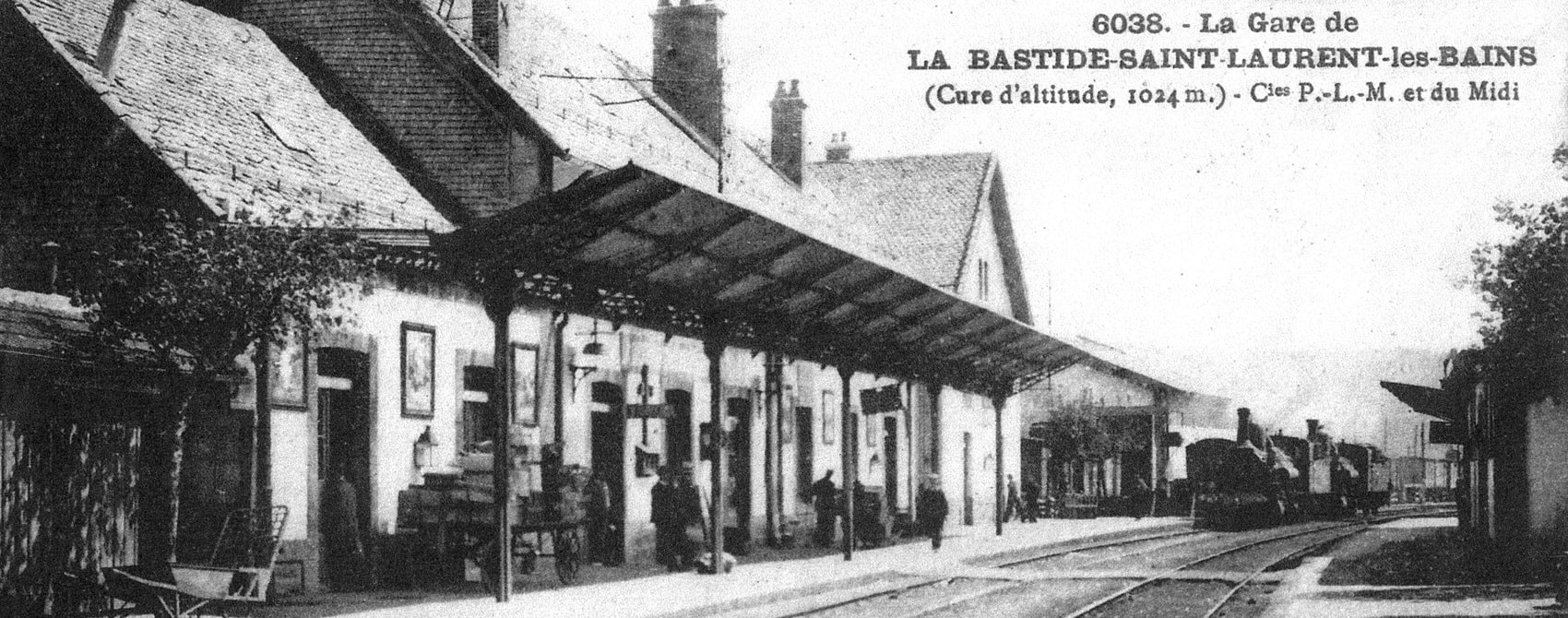
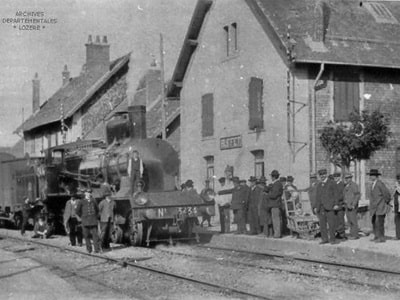
The route of this line has undergone numerous modifications due to the extremely rugged terrain it crosses. Originally, a much more direct and less winding route was planned between Mende and La Bastide in the 1880s. However, the difficulties encountered during the tunneling process, the astronomical construction costs, and the line's low profitability potential led to a complete reassessment of the project. Work that had already begun or was simply planned, particularly near Mende (Badaroux tunnel) and Belvezet (Altaret Goulet tunnel), was entirely abandoned. Ultimately, the current route, which prioritizes picturesque charm over efficiency, was studied and implemented much later.
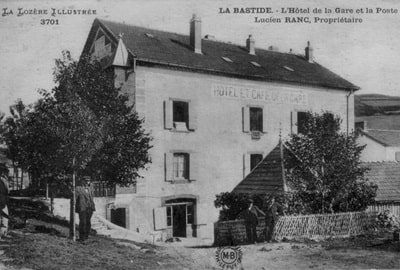
Fernand, who was not inclined toward agricultural work and felt somewhat desperate, had decided to leave this harsh region. He slipped away silently one January morning, just as the dawn was breaking his sleepless night. Wearing poor shoes and navigating treacherous, unpaved paths, he made his way to La Bastide-Puylaurent. There, the construction of the future railway line, the "Translozérienne," required a massive workforce. As one of the major engineering projects of the 19th century, this line—designed to connect Le Puy-en-Velay to Nîmes and serve Grandrieu, Rieutort-de-Randon, Mende, and Florac—experienced a rather turbulent history.
First presented in 1855 by the prefect of Lozère, the initial proposal was outright rejected by the study commission under the direct pressure of President Napoleon III. Fortunately, a slightly revised second program became the definitive project, despite fierce opposition primarily originating from the neighboring Ardèche department. Once these hurdles were overcome, and thanks to the decisive influence of Paulin Talabot, the future general director of the "PLM" railway network, as well as Théophile Roussel, the local deputy for Lozère, the project was finally approved. On June 19, 1857, the government declared the line to be of public utility.
On the ground, the task proved to be titanic, exceptionally grueling, and highly dangerous. Although the construction site had already been struck by several tragedies, work progressed against all odds. It moved slowly, to be sure, but giving up was never an option; the construction was well and truly underway. Nevertheless, difficulties continued to mount: massive and unforeseen obstacles, cleverly concealed by nature, constantly challenged the engineers and threatened to demoralize the workforce.
The layout and rugged profile of this railway line inevitably required the excavation of numerous tunnels and the construction of colossal infrastructures. Among these were dizzying viaducts that, from their eighty-meter heights, seemed to touch the sky. Jean-Baptiste had learned of these details from a traveling merchant from Langogne who sold clothing accessories. While this merchant was a tough negotiator, he was far from stingy with the news. Taking advantage of his hosts' hospitality for an entire afternoon, he passionately described the incredible undertaking and the sheer scale of the construction sites scattered across Lozère.
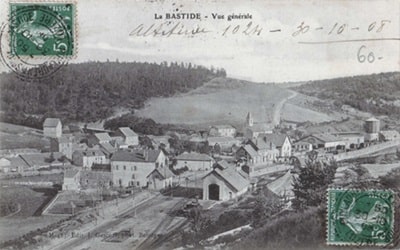
After taking the time to verify the merchant's claims, Jean-Baptiste finally took a genuine interest in this extraordinary endeavor. "But if the terrain is so steep, how do they plan to cross the mountain?" he asked, intrigued. "I’m getting to that! The peak will ultimately be bypassed using a seven-hundred-meter-long tunnel. This way, future trains will travel from the Allier valley to the Altier valley without having to climb the high summits." The merchant then elaborated on the section passing through the Chassezac valley. "A true marvel for the eyes, a place where God himself undoubtedly created beauty!" he added, before delving into a technical explanation of the grueling excavation of the Albespeyres tunnel near Prévenchères.
"Can you imagine, sir?" he emphasized. "The future railway will run through a 1,520-meter gallery carved into an incredibly hard mountain. It is a pharaonic operation, cutting through granite of unimaginable resilience. Just think," he noted, sounding like a seasoned engineer, "that the daily progress is a mere twenty centimeters!" He continued, seemingly inexhaustible on the topic: "Furthermore, due to the severe risk of asphyxiation for the engineers and stokers, there are currently plans to build a ventilation plant right at the tunnel entrance—an absolute innovation in this field."
Jean-Baptiste found himself a bit lost in this account, thoroughly impressed by such a wealth of knowledge. He desperately tried to grasp these technical terms, which were completely foreign to him, and eventually managed to ask a relevant question: "But how many of these massive infrastructures will the line require in total?" "About ten tunnels of varying sizes between La Bastide-Puylaurent and Concoules, along with four or five viaducts! The Villefort sector alone employs over two thousand five hundred workers." "That is simply magnificent!" exclaimed Jean-Baptiste in genuine admiration.
"And how much will all this work cost?" he asked. "An absolute fortune! For instance, the construction of the Altier viaduct is estimated at around eight hundred thousand gold francs. While that is only half the cost of the one in Chamborigaud, these amounts seem almost insignificant compared to the two million gold francs swallowed up by the completion of the Albespeyres tunnel." "Good heavens!" Jean-Baptiste reacted, utterly astounded by these staggering figures. "Those are truly colossal sums! It no longer surprises me that our esteemed deputy, Théophile Roussel, extends such warm gratitude to President Louis-Napoleon."
He grabbed a newspaper lying casually on the table. "Here! Read it yourself! Right there on the front page!" the merchant insisted. He put on his thick glasses and read the article aloud without hesitation: "Letter addressed to President Louis-Napoleon Bonaparte by Théophile Roussel, Deputy of Lozère. Sire, by ordering the execution of the law of June 19, 1857, you have deigned to turn your attention to this captivating but all too often forgotten region. By connecting it to the national railway network, you have breathed new life into it."
Chronicle of an Era. By Serge Durie, Société des Écrivains.
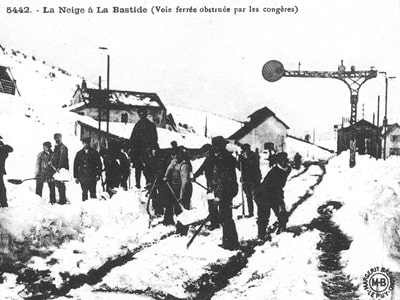
The story takes an even more remarkable turn at the beginning of the 20th century. The Translozérienne line included a section that reached the small hamlet of Larzalier, perched at an altitude of 1,215 meters. Not only was this the highest point of the route, but it was also the most problematic during winter. In February 1903, railway traffic was completely paralyzed by exceptionally heavy snowfall. Faced with this major climatic challenge, engineers had to take extraordinary measures, ordering the construction of six artificial snow galleries.
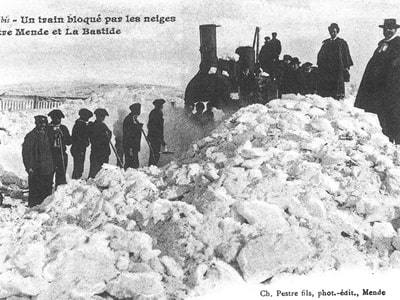
Between January and February 1907, a single train attempted to brave the storm but never reached its destination, getting stuck in the snowdrifts. The following summer, three additional galleries were built, bringing the total to eight protective structures with a combined length of 1,563 meters. This infrastructure stood as a unique engineering feat in France. It is easy to picture the steam trains plunging into these dark tunnels to withstand the harsh Lozère winters. It is thanks to these protective galleries that the Translozérienne managed to survive, serving as a true testament to human ingenuity in the face of nature's relentless fury.