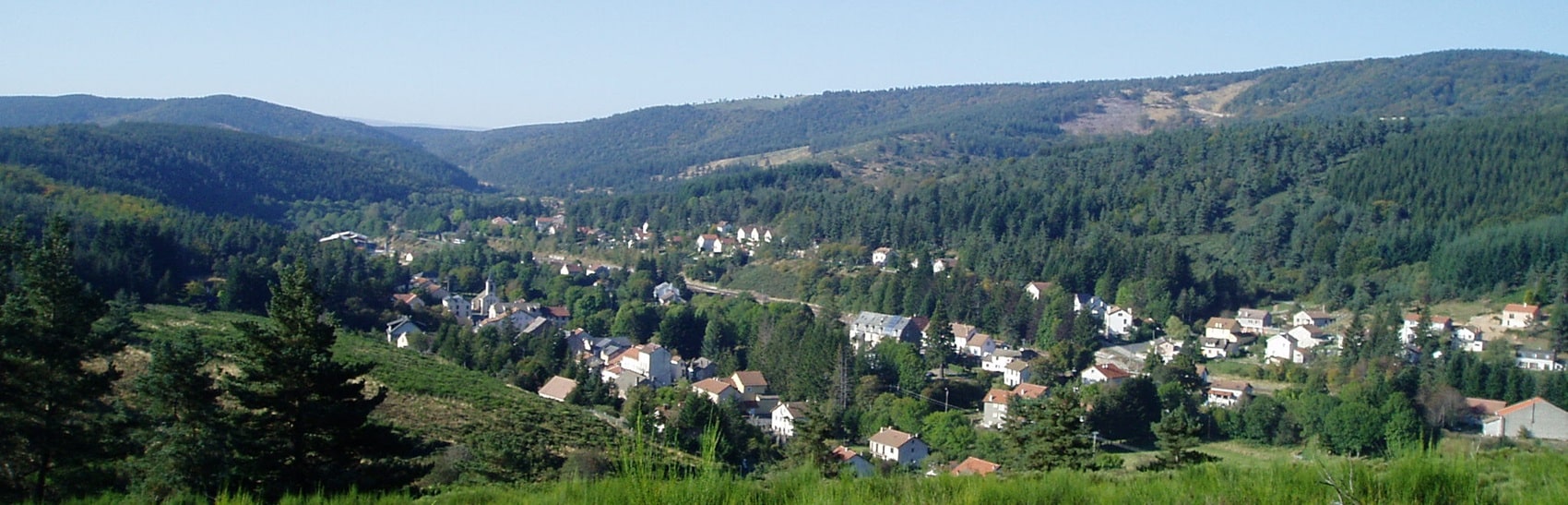
Beautiful escapes between the Cévennes, Margeride, and the Ardèche mountains
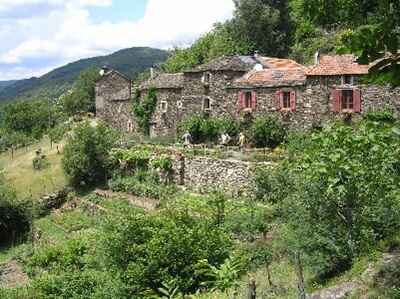 The Cévennes, spanning several departments (Lozère, Gard, Ardèche, and a small part of Hérault), constitute an emblematic mountain range in the southern Massif Central. Shaped by centuries of pastoralism and human history, these mountains are protected today by the Cévennes National Park. This pristine natural area of rare diversity is recognized as a Biosphere Reserve and officially listed as a UNESCO World Heritage Site for its Mediterranean agro-pastoral cultural landscapes.
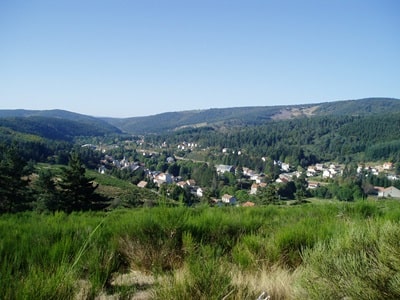 The peaks of the Cévennes, although modest in altitude (Mont Lozère reaches 1,699 meters and Mont Aigoual 1,567 meters), offer spectacular panoramas. These ridges, often arid and windy, are characterized by their moors and rocky outcrops. The causses—vast limestone plateaus such as the Causse Méjean or Causse Noir—alternate with deep valleys sculpted by rivers like the Tarn and the Jonte. The steep valleys of the Cévennes, crossed by winding rivers such as the Gardon, are home to chestnut forests, cultivated terraces, and typical villages. These stunning landscapes tell the story of human effort to successfully tame an often harsh environment.
Margeride and Gévaudan, two emblematic regions of the Massif Central, are defined by the beauty of their landscapes, their rich heritage, and the fascinating legends that surround them. Located primarily in Lozère, but extending into Cantal and Haute-Loire, these wild lands are distinguished by their rural character and intimate connection with unspoiled nature.
Margeride, a vast granite plateau extending between 800 and 1,500 meters above sea level, is a wild and preserved region. Its landscapes, alternating between pine forests, pastures, and granite boulders, offer ideal serenity for nature lovers. Margeride is a land of livestock breeding, and its culinary specialties reflect this agricultural heritage. Hearty dishes based on beef or lamb, wild mushrooms, and potatoes—the essential ingredient of traditional aligot—are absolute must-tries. Gévaudan, a former historical province largely corresponding to modern-day Lozère, is best known for the terrifying legend of the Beast of Gévaudan.
The Aubrac plateau, situated between 1,000 and 1,400 meters above sea level, is the result of ancient volcanic activity and glaciation that shaped its valleys and rocky chaos. This territory is distinguished by its vast open landscapes, dotted with huge granite blocks, small glacial lakes, and ancient dry stone walls. The immense meadows, primarily used for cattle breeding, are one of the true symbols of Aubrac. The changing seasons magnify this landscape: in winter, the plateau is covered in snow, while in spring, the meadows are tinged with the vibrant colors of wildflowers, especially yellow gentians and daffodils. Summer is marked by the active pastures when the Aubrac cows head up to graze, and autumn by mysterious mists and golden light. Aubrac is a paradise for botany lovers, with rare endemic species. As for local fauna, the high plateau is inhabited by birds of prey, deer, and sometimes elusive wolves from neighboring regions.
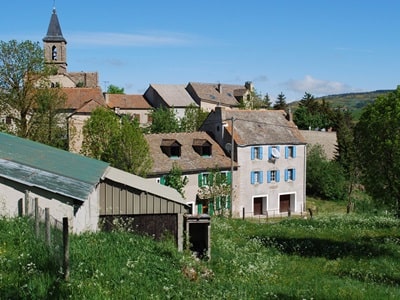 Tanargue, nicknamed "the mountain of thunder" due to its Celtic origins (Tan for thunder, and Argo for mountain), is a massive mountain range located in southern Ardèche. At the crossroads of the Cévennes and the Ardèche plateau, this territory is distinguished by its magnificent landscapes, exceptional biodiversity, and rich cultural heritage. The massif is protected by the Monts d'Ardèche Regional Natural Park. Its rich biodiversity includes a varied fauna (birds of prey, wild boars, deer, otters) and a highly diverse flora with rare endemic species.
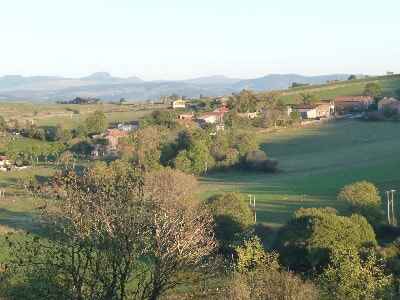 Vivarais, a fascinating former historical province of the Kingdom of France, today corresponds to a significant part of Ardèche and southern Haute-Loire. Nestled in the Massif Central, this territory is distinguished by its varied landscapes, ranging from volcanic plateaus to deep gorges, as well as its rich historical and cultural heritage. It is a place where ancestral traditions, deep spirituality, and unspoiled nature blend seamlessly. Vivarais is dominated by high plateaus, such as the Vivarais-Lignon plateau, shared between Haute-Loire and Ardèche. These vast, open spaces are punctuated by volcanic peaks, such as Mont Mézenc and Mont Gerbier de Jonc—the source of the majestic Loire River—which offer spectacular panoramas.
Dense forests cover a significant part of the territory, featuring beech, oak, and fir trees. On the plateaus, moors and pastures bear witness to a long pastoral tradition. The Vivarais was a major center of the Protestant Reformation. The fierce resistance of the Camisards in the 17th century, particularly in the nearby Cévennes, left a deep, enduring spiritual and cultural mark.
The Allier Gorges, located between Haute-Loire and southern Auvergne, are one of the wildest and most spectacular landscapes in France. Carved by the Allier, one of the last truly wild rivers in Europe, they offer a diversity of panoramas, deep ecological richness, and a remarkable cultural heritage. This pristine natural setting is a popular destination for outdoor activities, wildlife observation, and discovering authentic ancient villages. The deep gorges extend over some sixty kilometers between Langeac and Prades. The river winds through steep basalt and granite cliffs, forming a deep, sometimes incredibly steep-sided canyon where the rushing water has sculpted elegant natural meanders and peaceful sandy beaches.
The Chassezac Gorges, located in the south of France, are a spectacular and popular natural site, particularly in the Ardèche region. They are formed by the Chassezac River, a tributary of the Rhône, which winds through highly varied and impressive landscapes. The breathtaking Chassezac Gorges are located mainly in the departments of Ardèche and Lozère. They extend over approximately 10 kilometers, entirely surrounded by imposing limestone cliffs that can reach several dozen meters high. These deep gorges are surrounded by impressive rock formations, lush Mediterranean forests, and typical vegetation of the region, offering an incredibly remarkable biodiversity.