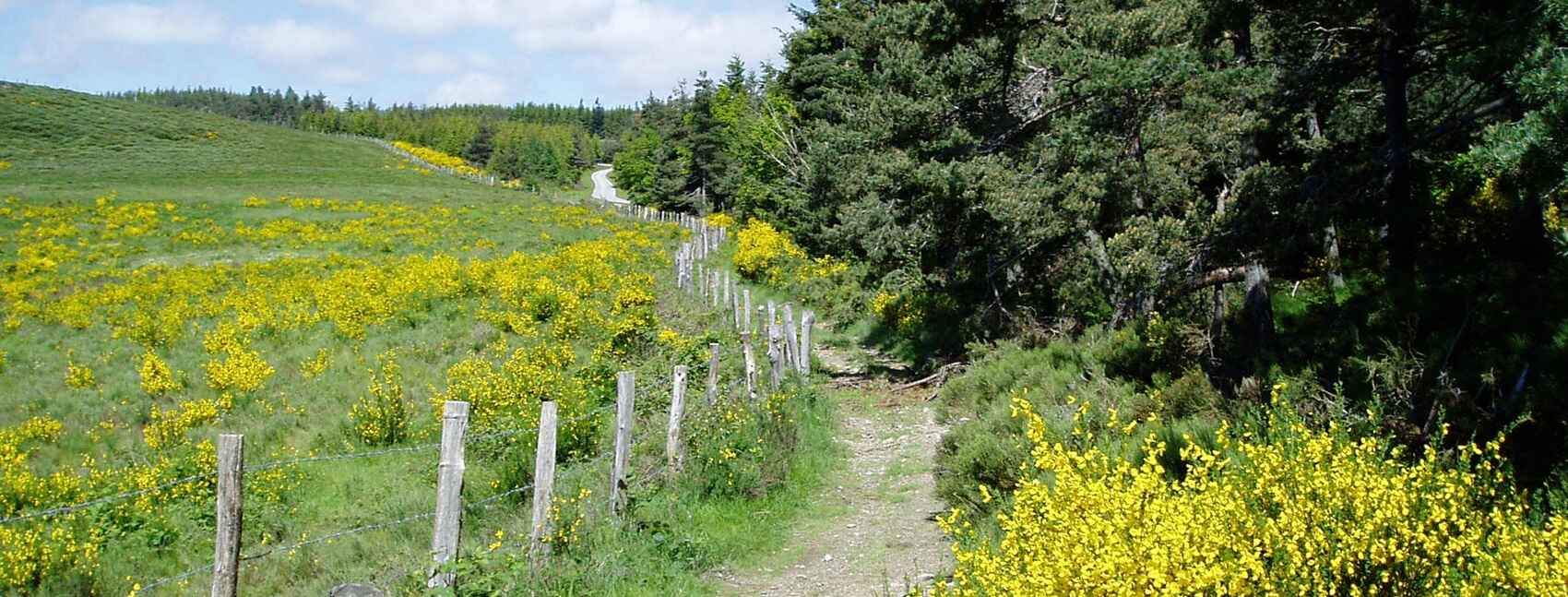
 Contrasting landscapes between Lozère and Ardèche
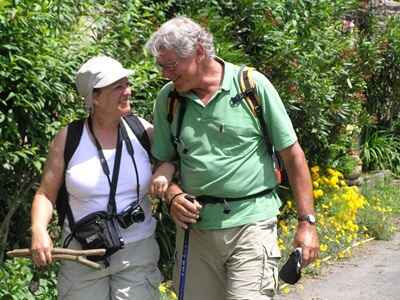
La Bastide-Puylaurent is a unique village, perfect for short, medium, and long hikes. Just 300 meters from L'Etoile Guesthouse, you can immerse yourself in nature on trails that stretch across France or simply enjoy a scenic loop of a few kilometers. The surrounding landscapes vary dramatically between Ardèche, Lozère, Haute-Loire, and the Cévennes National Park.
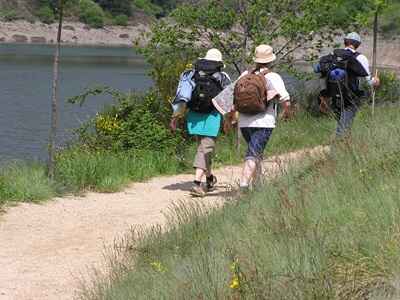 To the North, towards the high plateaus of Haute-Loire, the scenery takes on a rural charm: small farms, Puy-en-Velay green lentil fields, grazing livestock, Mount Mézenc, ancient volcanoes, pristine lakes, the sources of the Loire River, and the Allier Gorges.
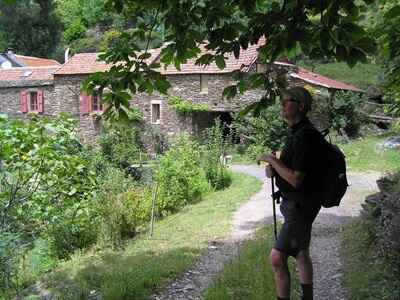
To the South, heading towards the Cévennes and Mount Lozère, nature feels more untamed and less shaped by human hands. Here, you will find typical granite farmhouses with slate roofs, local honey production, terraced farming, and remote hamlets lost in the wilderness. The area is also steeped in the history of the French Wars of Religion between Protestants and Catholics, particularly in towns like Florac, Le Pont-de-Montvert, and Génolhac.
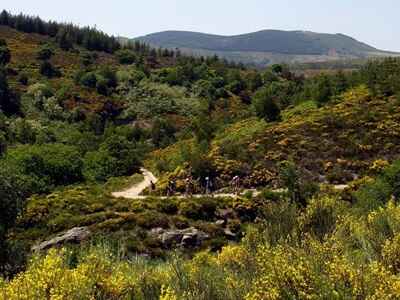
To the East, towards Ardèche, the landscape surprises with its rugged, wild beauty. Expect magnificent scenery, paradisiacal rivers perfect for swimming, small paths winding through chestnut groves, and traditional old hamlets like Montselgues, Loubaresse, and Thines. You can explore the Borne and Chassezac river gorges, the peaks of the Ardèche mountains, and the Tanargue massif. Visitors can also enjoy thermal treatments in Saint-Laurent-les-Bains, stroll through the vibrant Saturday morning market in Les Vans, and visit the Notre-Dame-des-Neiges Abbey, located just 3 km from La Bastide-Puylaurent.
To the West, towards the heart of Lozère, the terrain is less steep but sits at higher altitudes, featuring small valleys perfect for trout fishing in rivers such as the Allier, Lot, Chassezac, and Altier. The trails are wider with gentler slopes, offering less strenuous hikes compared to the Ardèche side. Numerous short and medium-length hikes are easily accessible thanks to the local train connecting La Bastide-Puylaurent to Mende.
 Gévaudan, a land of history and major routes
From its privileged vantage point on the upper tier of a grand natural amphitheater overlooking the Mediterranean, Lozère basks in the warm Occitan sun. Hikers here experience the serene thrill of walking near the sky while traversing the rounded peaks of Mount Lozère, Margeride, Gévaudan, Aubrac, or the Cévennes. You can also marvel at the gentle landscapes and crystal-clear spring waters of the Tarn and Jonte gorges, which rank among the most stunning natural sites in Europe. Lozère boasts a rich diversity of natural regions and geologically sculpted landscapes.
 Using limestone from the vast Causses of Sauveterre and Méjean, early builders constructed farmhouses with exceptional proportions and impressive vaulted ceilings. With the volcanic basalt of Aubrac, they built burons to shelter shepherds and process milk when the fierce burle wind blew. The legacy of these ancestral builders is everywhere: from excavated Gallo-Roman ruins and the Gothic cathedral of Mende, to the Romanesque churches of Margeride and Cévenol temples. From simple communal bread ovens to the stone crosses in our villages, human history has deeply marked the evolution of this land.
Lozère, and its historical province of Gévaudan, was never isolated until the mid-19th century. In fact, it was a significant hub of major routes and crossroads where kings, peddlers, monks, knights, merchants, herds, and carts frequently crossed paths. The reasons for this movement were highly diverse—ranging from religious and economic to military and pastoral. Above all, it was a vital contact zone between Mediterranean civilizations (Greek, Roman, or Arab) and the Nordic world—the mysterious lands of tin and dark forests inhabited by Celto-Germanic peoples.
Among the countless roads, paths, and drovers' trails (drailles) that still crisscross our province, one is particularly close to us: the Regordane Way. This historic trail linked Nîmes to Le Puy-en-Velay and the Arverne region, effectively connecting the Mediterranean to the "barbarian" world of Gaul, and even reaching as far as the distant lands of Brittany and Ireland.