
To Chamborigaud via La Garde-Guérin, Villefort, Aujac, and Peyremale
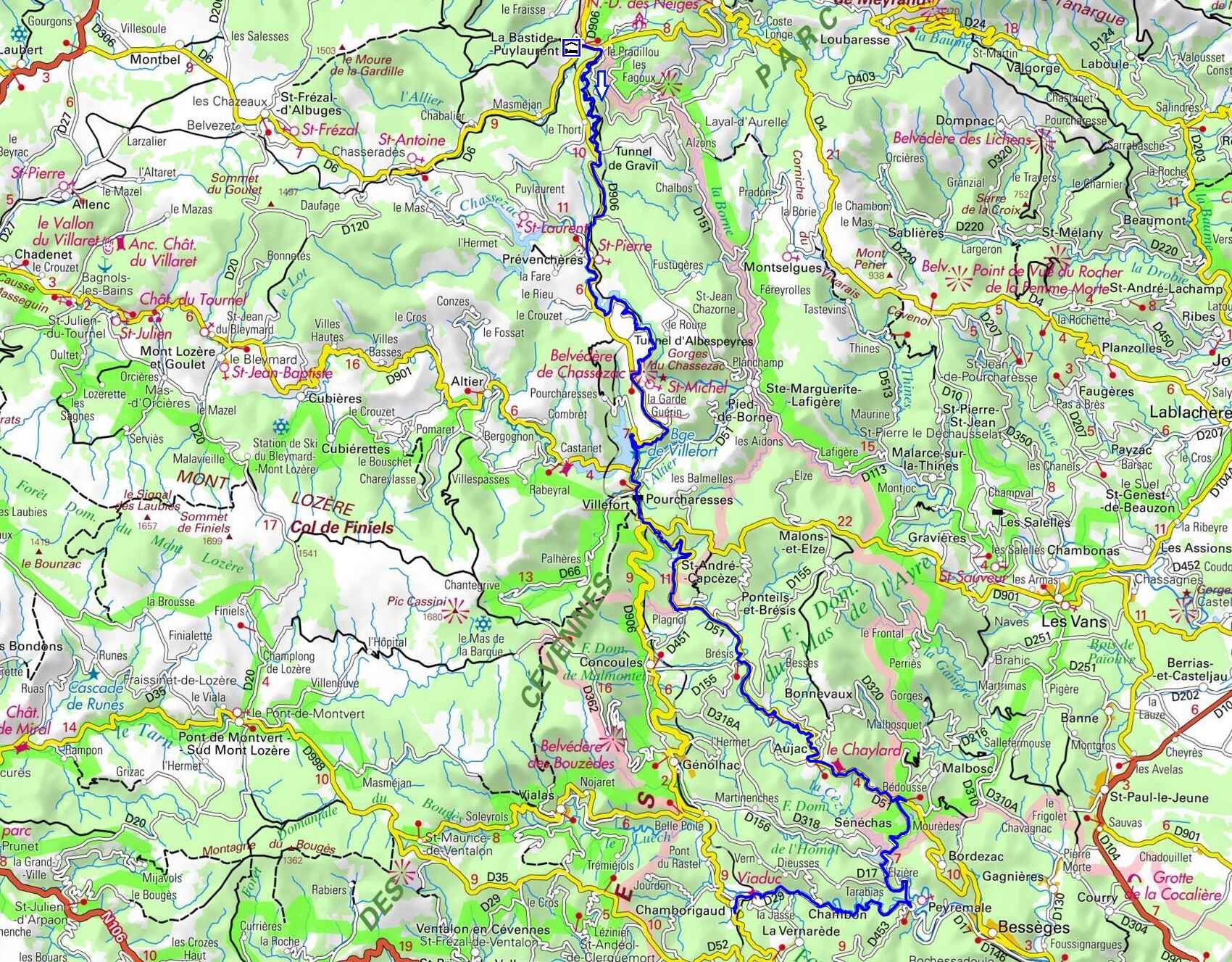
 Distance: 69.8 km. Maximum altitude: 1,082 m. Minimum altitude: 204 m. Total elevation gain: 783 m.
IGN Maps: La Bastide-Puylaurent (2738E). Mont Lozère Florac PN des Cévennes (2739OT). Largentière, La Bastide-Puylaurent, Vivarais Cévenol (2838OT). Bessèges Les Vans Chassezac Valley (2839OT).
From L'Étoile, head toward the center of the village and follow the signs for Villefort straight ahead until you reach the Pradillou roundabout. Turn right and follow the D906 for 800 meters. Then take the old abandoned road on your left for 5.7 km. Rejoin the D906 and follow it for 8.8 km, passing through La Molette and Prévenchères. Just after the Rachas dam, turn left toward Albespeyres, taking the greenway for 6 km to La Garde-Guérin. Reconnect with the D906, which you will follow all the way to Villefort. Ride through the village and up to the roundabout, then take the D51 for 22.1 km, passing through Saint-André-de-Capcèze, Vielvic, Le Martinet, and Aujac. Turn right onto the D52 to the Col de Soulages, passing through Mourèdes. Next, follow the D17 on your left to Peyremale via L'Elzière and Mas Herm. At the roundabout, turn right onto the D29 toward Chamborigaud, passing through Chamboredon and Chambon. Finally, turn left onto the D906, then left again just before the viaduct to reach the train station. Return to La Bastide-Puylaurent by train (Train schedules).
Print the route - Bicycle rentals
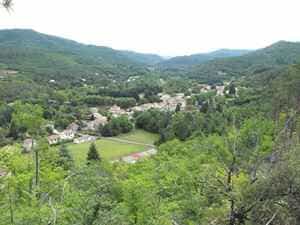
Aujac is a picturesque village nestled in the Gard department of southern France. With a rich history dating back to Roman times, the area was long recognized as a vital agricultural and wine-producing hub. Throughout the centuries, Aujac weathered numerous conflicts, including the Wars of Religion between Catholics and Protestants in the 16th century, as well as the turbulence of the French Revolution. In the 19th century, the village experienced a significant economic resurgence thanks to the booming silkworm industry. The arrival of the Alès-Bessèges railway line in 1904 further invigorated the region, facilitating the transport of both goods and passengers.
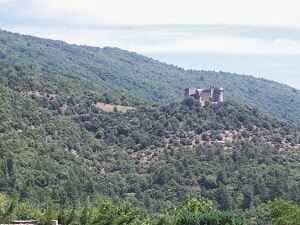
The village is also celebrated for its well-preserved medieval architecture. Its stunning 12th-century Romanesque church and the impressive Château d'Aujac (also known as the Château du Cheylard) are major highlights. The construction of the castle began in the 12th century using light yellow sandstone quarried locally. The religious complex comprises a nave, two semi-circular vaulted bays, a barrel-vaulted choir, a vaulted apse, and a striking portal. Significant additions were made in 1480, including a gable wall, a comb bell tower, and side chapels. On the exterior, the intricately carved capitals depict fascinating scenes, such as a man with a large head resting his folded legs on a lion. Built between the 11th and 12th centuries on a rocky spur, the Château d'Aujac proudly dominates the upper Cèze valley in the Cévennes, surrounded by historic buildings once used by peasants and lords alike.
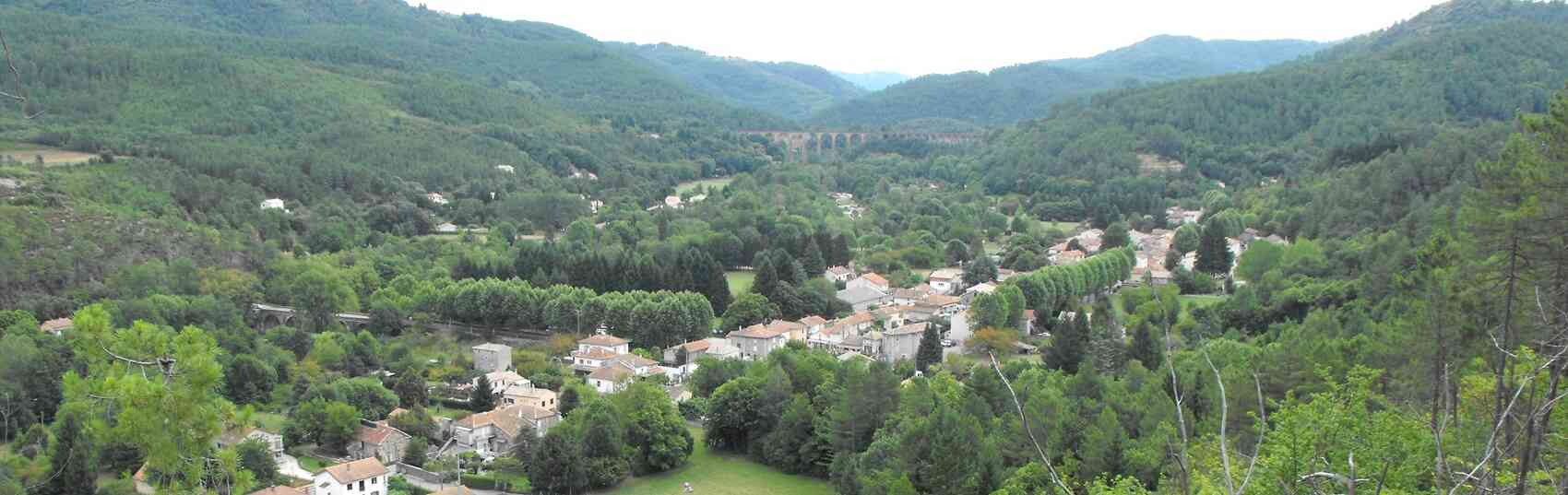
Chamborigaud is a beautiful commune located in the heart of the Cévennes within the Gard department of the Occitanie region. The town is widely known for its spectacular historical heritage, most notably its monumental railway viaduct—a masterpiece of 19th-century engineering that is now listed as a historical monument. The town also features a beautiful 12th-century Romanesque church dedicated to Saint-Pierre. Chamborigaud serves as a perfect starting point for outdoor activities, offering marked hiking trails that weave through remarkable natural landscapes. Situated on the scenic Cévennes railway line, travelers are treated to sweeping panoramic views of the entire region. The nearby Château de la Jasse, a 16th-century castle located in the hamlet of La Jasse just 4 km away, is also worth a detour.
First mentioned in 1345 in the Cartulary of the seigneury of Alais, Chamborigaud boasts deep historical roots. The origins of the town date back to Antiquity when it was located along the old Roman road linking Nîmes to Montpellier. In the Middle Ages, Chamborigaud was a crucial stop on the GR®700 Regordane Way. During the Camisard War, the villagers distinguished themselves among the "Florentines," a group known for committing atrocities in the name of religion. Despite being partially destroyed during the Hundred Years' War, the town was successfully rebuilt in the 16th century. The 19th century marked a period of immense economic growth for Chamborigaud, spurred by the construction of its famous viaduct and the opening of the Paris to Clermont-Ferrand railway line. Chamborigaud is also proudly known as the birthplace of the writer Jean-Pierre Chabrol, the celebrated bard of the Cévennes, though the area has faced economic and demographic challenges since the closure of its coal mines.