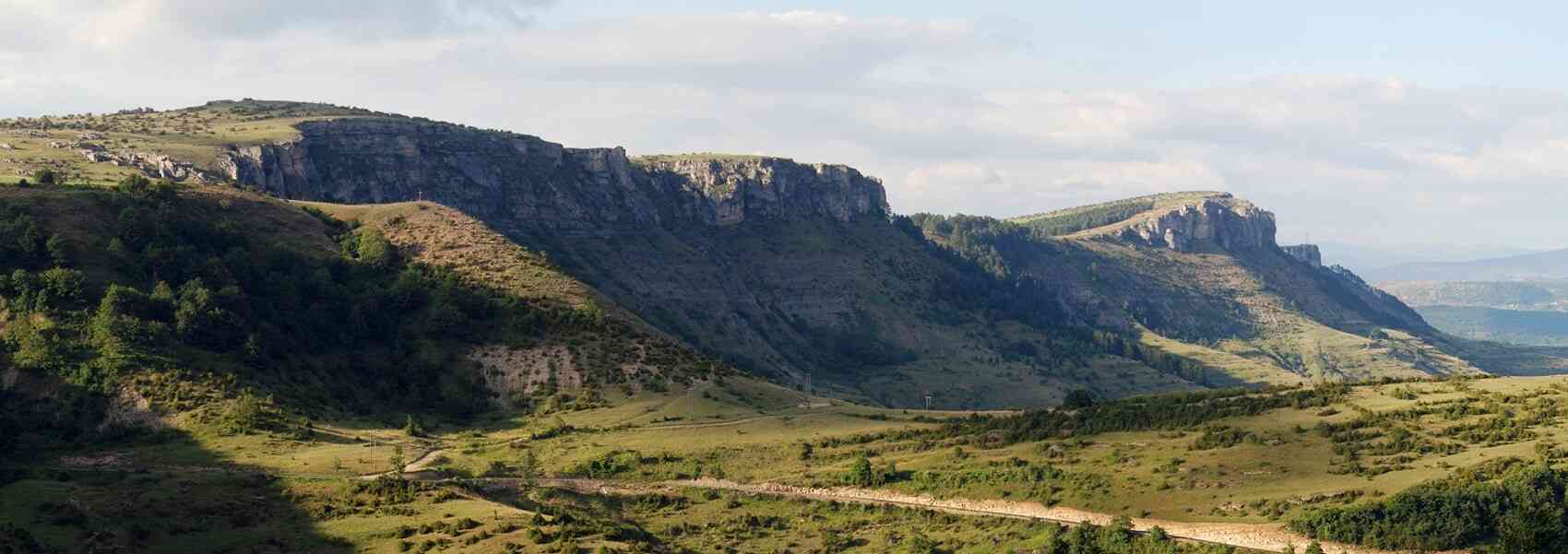
The Cevennes and the Causses form an exceptional geographical and cultural ensemble, spanning several departments. This territory offers striking contrasts: on one side, the Causses—vast, arid limestone plateaus characterized by a karst relief and steppes; on the other, the Cevennes—an imposing schist and granite massif marked by deeply incised valleys and dense vegetation. The history of these two regions is intimately linked to sheep transhumance, which has lastingly shaped the ancient drovers' roads (the drailles) and the typical architecture of the shepherds' huts. The flora displays an incredible diversity, ranging from Mediterranean species in the Cevennes valleys to the dry grasslands of the high Caussenard plateaus. The fauna is equally iconic, highlighted by the triumphant return of vultures to the Causses and the discrete presence of beavers, alongside numerous other species, in the rivers of the Cevennes.
 A history marked by invasions and culture
In the early 5th century, the Barbarian invasions triggered the collapse of the Roman Empire. The south of France then endured a series of incursions that left a profound mark on the region. Between the 5th and 10th centuries, Vandals, Visigoths, Franks, and Saracens followed one another in turn. Although this period was defined by pervasive martial violence, these upheavals also fostered an unprecedented cultural melting pot. As the year 1000 approached, populations anxiously awaited the end of the world, but history decided otherwise. The advent of new agricultural techniques stimulated the economy, led to demographic growth, and significantly improved living conditions. This economic prosperity was accompanied by a flourishing cultural development, illustrated by poetry, the art of the troubadours, and the ideals of chivalry, as well as a spiritual surge marked by the expansion of monastic orders, the Templars, and Catharism.
Thus, around the 12th century, a highly refined culture and civilization emerged in the Languedoc region. However, this golden age was to be short-lived. According to some sources, its decline began abruptly with the outbreak of the Albigensian Crusade (against the Cathars) in 1209. This deterioration worsened dramatically in the 14th century, a dark era ravaged by the arrival of the plague, famines, and incessant warfare.
 The langue d'oc and the Occitan heritage
A language is much more than a mere communication tool: it largely shapes our way of thinking and acting. A shared mastery of a language often grants a group stronger social cohesion. Subsequently, beyond orality, the written language took on paramount importance, as it is through it that the memory of the past has been handed down to us. During the five centuries of Roman domination, Latin had naturally established itself as the everyday language, gradually replacing the previously used Gallo-Romance.
In northern France, Latin quickly became tinged with Celtic and Gallic influences, before being lastingly marked by the Franks following the Barbarian invasions. The south, on the other hand, remained more deeply anchored in its Romance roots while enriching itself through contact with other Mediterranean cultures. This is how the "langue d'oïl" developed north of the Massif Central, while the "langue d'oc" reigned in the south.
 From the Pyrenees to the Alps, the langue d'oc had already established itself as an autonomous and structured language by the 10th century. Catalonia, Provence, Gascony, Limousin, Auvergne, and Dauphiné all belonged to this vast sphere of influence. The oldest known written document in Occitan to date is believed to be the Chanson de Sainte-Foy d'Agen, composed around 950. Driven by the creative impulse of the troubadours, this popular language was vastly enriched during the 11th and 12th centuries. Languedoc was then home to nearly 500 troubadours, who bequeathed a corpus of about 2,600 poetic texts to posterity.
The langue d'oc, later renamed Occitan, was one of the most important European languages of its time. Although closely related to Latin, it possesses very distinct features. Corsican and Catalan—two languages that are still very much alive today—are, in fact, directly related to it. Over the last few decades, many voices have been raised to rehabilitate and promote Occitan as both a written and spoken language. It is now taught at the University of Toulouse, and several regional publishing houses are dedicated to releasing works in Occitan.
In today's everyday language, including in the Cevennes, one regularly finds words and sounds inherited from this rich history. For instance, "lou" is not a first name here, but the masculine definite article. The word montanha means mountain, the "o" is often pronounced "ou", and the "a" at the end of a word generally takes the sound of an "o". Fajas refers to the beech tree, font to a water spring, pradel to a small meadow, and serre designates a jagged mountain ridge. Pailhes is the traditional place where straw is stored. These few examples illustrate the strong Occitan imprint that remains vividly alive in southern dialects.
 Tourism, gastronomy and accommodation
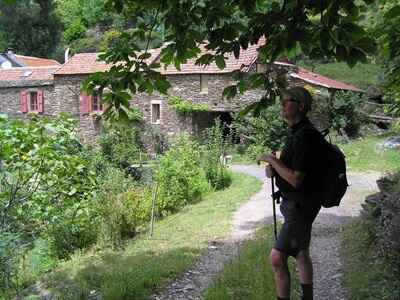
The Cevennes and the Causses are also renowned for being highly affordable destinations. In many small villages, it is easy to find hotels with simple yet particularly economical comfort. Logically, the main tourist infrastructure is concentrated in the larger towns, on the edge of the Cevennes, and near major rivers such as the Gardon, the Tarn, or the Jonte. Almost every locality has at least one restaurant offering a complete and tasty meal at a low price. While the local cuisine does not strive to be haute gastronomy, it prides itself on being authentic, generous, and resolutely traditional, favoring natural, locally-sourced products. Here, you can savor comforting dishes featuring porcini mushrooms (cèpes), goat cheese (like the famous pélardon), and hearty salads mixed with cheese, bacon bits, and tomatoes, all generously seasoned with local aromatic herbs. To accompany the meal, it is customary to opt for a convivial "vin ordinaire" (table wine) or an excellent regional wine.
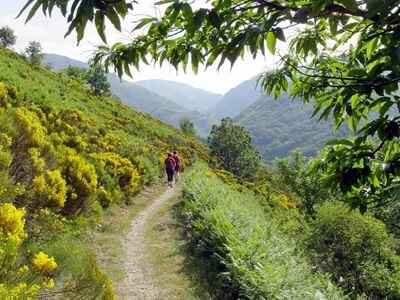
The gîtes d'étape (stopover lodges) are not classic youth hostels, but convivial accommodations open to all hikers. With no age limit or strict curfew, they offer a particularly warm welcome and are most often located in the immediate vicinity of the major long-distance hiking trails (GR). They are generally equipped with a communal kitchen, full sanitary facilities (showers and toilets), and provide blankets. Although booking is usually only mandatory for large groups, a quick phone call in advance is never a bad idea: it ensures you are expected, with the final confirmation taking place on the spot when you drop your backpack on your bed.
 Characterful stopover lodges close to nature
Given that these are mostly private initiatives (not to be confused with traditional rural gîtes or holiday rentals), each lodge has its own character and singularity. In recent years, the comfort of these stopover accommodations has improved significantly throughout the Cevennes, often offering a cozy fireplace and sometimes even a refrigerator for guests to use. The "relais", a more rustic version of the gîte d'étape, offers more limited space; there is usually no shower (though running water is available), and you sometimes have to make do with sleeping on straw. The region boasts a large number of lodges well-distributed along the hiking routes, with some villages even hosting several. An updated list of these accommodations is published every year and made available starting in June.
Wild camping is strictly prohibited within the Cevennes National Park. However, with basic courtesy, it is possible to ask a farmer for permission to set up camp, or to pitch your tent on the grounds adjacent to a gîte d'étape. It should always be kept in mind that the Cevennes remain a very remote region, where scattered farms and dwellings are rare. Due to the high risk of wildfires, lighting a fire is also strictly forbidden. For hikers willing to forgo minimal comfort, it is sometimes possible to spend the night in makeshift shelters, such as old sheepfolds or abandoned barns, provided, of course, that you are equipped with your own sleeping bag.
 The Cevennes National Park and its landscapes
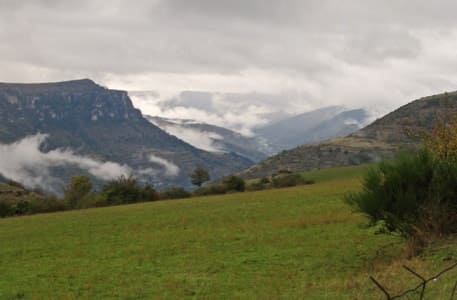
The Cevennes form a massive mountain range that constitutes the southern extension of the Massif Central. The highest peaks rise in the north, around Mont Lozere, which culminates at an altitude of 1,699 meters, while in the south, it is Mont Aigoual (1,567 meters) that attracts the greatest number of visitors and nature enthusiasts. For convenience, it is common to distinguish the "Northern Cevennes" (Mont Lozere sector) from the "Southern Cevennes" (Mont Aigoual sector). The term "Cevennes" actually has several meanings: it can refer to the mountain range itself, the Cevennes National Park, or, more broadly, the entire historical and cultural region. Administratively, the northern half of the Cevennes belongs to the Lozere department, about 40% of the southern part is located in the Gard, and the remaining 10% spills over into the Ardeche.
Since 1970, the central part of the massif has been recognized and rigorously protected by its National Park status. Within the 91,400 hectares that make up its core zone, only 600 people live and work year-round. The adjacent peripheral zone, covering 237,000 hectares, is home to approximately 41,000 inhabitants, perfectly illustrating the very low population density of this preserved territory. The creation of such a national park responds above all to an absolute imperative: the unconditional protection of nature.
This is why particularly strict government regulations are enforced here. For instance, only local residents are explicitly authorized to pick wild flowers, plants, or fruits. Wild camping is banned, and lighting campfires is subject to very heavy penalties. Hunting is also subject to rigorous oversight. Through these measures, the French authorities strive to preserve the authentic character of the region, seeking in particular to curb land speculation. Therefore, one should not expect to stroll through a carefully manicured urban park: nature here has retained all its unpredictability and ruggedness.
 The Causses: limestone plateaus and pastoralism
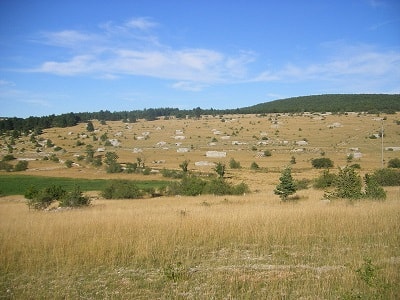
Natural conditions have remained authentic and untouched within these French nature parks, which is an excellent thing for biodiversity. Further west of the Cevennes, the Causses stretch out majestically. These are vast, arid limestone plateaus, perched between 800 and 1,200 meters in altitude, whose surface is only sparsely covered with scattered shrubs or small pines. Hardy flocks of sheep graze on these rugged lands, which are swept by icy winds in winter and crushed by a blazing sun during the summer months. It is customary to distinguish between the "Grands" (Great) and "Petits" (Small) Causses, but this designation merely reflects the surface area of these plateaus.
The most famous "Grands Causses" are: the Causse Mejean, the Causse du Larzac (a vast 1,400 km²), the Causse de Sauveterre, and the Causse Noir (200 km²). Of all of them, only the latter presents a more or less wooded relief. The strict regulations in place are absolutely necessary to protect the fragile ecological balance of the Cevennes and the Causses. They guarantee the long-term preservation of the region's exceptional biodiversity, grandiose landscapes, and invaluable cultural heritage.
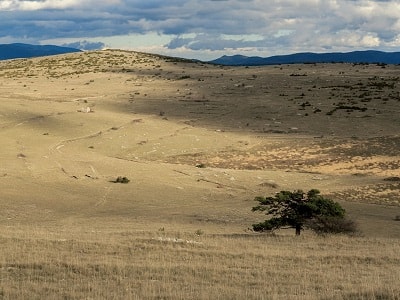 The tormented and rugged relief of the Cevennes is strongly characterized by spectacular jagged ridges, locally called serres. This is a topographical feature that the walker notices immediately upon venturing deeper into the hinterland. The ravines, often steep and deeply carved by water, are known as valats. On these slopes, between 600 and 900 meters in altitude, chestnut trees—the ultimate sustaining tree of the Cevennes—reign supreme.
In the northern Cevennes, gravitating around Mont Lozere, the subsoil consists almost exclusively of granite. Further south, spectacular schist formations rise high above the landscape. Between these two geological dominants, one can still find rare outcrops of limestone rocks, concentrated primarily near major waterways.
Near L'Hospitalet and Barre-des-Cevennes, you can cross a few "petits causses", which turn out to be significantly less arid than the true grand Caussenard plateaus. No matter the location, the landscape offers a striking alternation of high plateaus, chaotic rock formations, and dense wooded areas. Large and majestic forest belts notably encircle the massifs of Mont Lozere and Mont Aigoual.
Thanks to these forests, it is entirely possible to string together long hours of walking in the shade, well protected from the fierce rays of the summer sun. Up to an altitude of about 1,000 meters, the forest harbors, alongside the omnipresent chestnut tree, diverse species such as holm oak, pine, beech, and birch. Above this symbolic 1,000-meter limit, the dense forest gives way to the garrigues, a plant ecosystem typical of the entire southern half of France.
 From the garrigues to vertiginous canyons
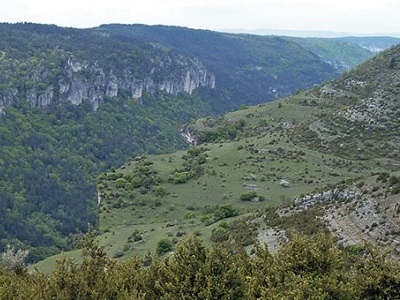
The garrigues constitute a remarkable plant formation, characterized by low, bushy, and often highly aromatic shrubs, such as rosemary, thyme, lavender, and savory. These resilient plants are perfectly adapted to the particularly arid and hot climatic conditions that grip the region in summer. From end to end, the Cevennes stand out as a natural region of unspeakable beauty, offering a great diversity of habitats to a particularly rich flora and fauna.
On the rocky slopes of the highest mountains, the vegetation naturally becomes sparser. These high-altitude garrigues are then dominated by junipers, heathers, and thick bushes of boxwood. Even deep within the Cevennes' interior, certain micro-regions stand out for their beauty, notably the famous Vallee Francaise, the mysterious Montagne de la Vieille Morte, the Bouges ridge, and the wild Vallee Borgne. Landscape diversity is undoubtedly never lacking in the Cevennes.
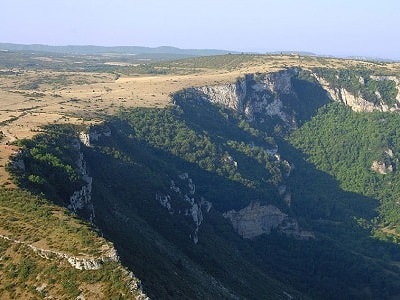
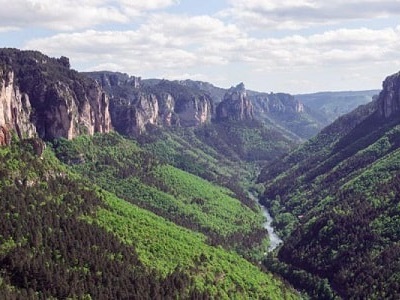
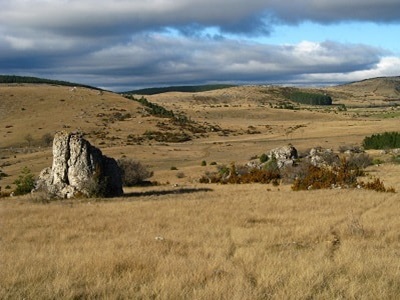 The Causses, for their part, rest on an eminently porous subsoil. This is composed of limestone and marl (fine calcareous residues naturally mixed with clay). It is this geological specificity that explains the presence of countless caves, underground rivers, sinkholes (avens), and spectacular pits in these regions. On the surface, the high plateaus are crossed and fractured by riverbeds so deeply incised that they form immense, dizzying canyons. The soil, too thin and rocky, is hardly suited to traditional agriculture. On the other hand, you will cross paths with numerous flocks of perfectly acclimatized sheep; breeding them yields wool, meat, and the milk essential for making renowned cheeses like pelardon and Roquefort.
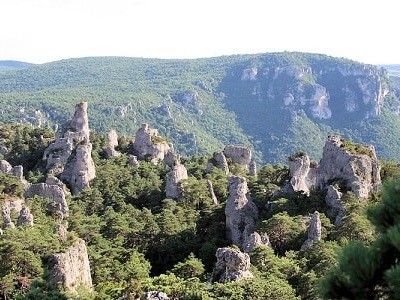
Of course, pastoralism here always retains an artisanal and small-scale dimension: you will not find huge industrial farms. The Caussenard landscape is also punctuated by lavognes (or lavagnes), those paved artificial ponds that serve as precious drinking water reservoirs for the animals. Sotchs, on the other hand, refer to natural depressions that retain a bit of soil and are often surrounded by a few patches of greenery. Under the effect of millennial erosion, the limestone rock formations sometimes take on strange, monumental, and impressive shapes, particularly visible as one approaches the canyons. While the terms "Causses" and "Cevennes" are often confused by visitors, it is not uncommon, in a very broad sense, to hear the inhabitants of the Causses refer to themselves as "Cevenols". A bridge between the harshness of the stone and the richness of the earth, the Cevennes and the Causses undoubtedly form a natural region of unparalleled splendor and diversity. Their grandiose landscapes, shaped by the elements, remain the privileged refuge of an exceptional flora and fauna.