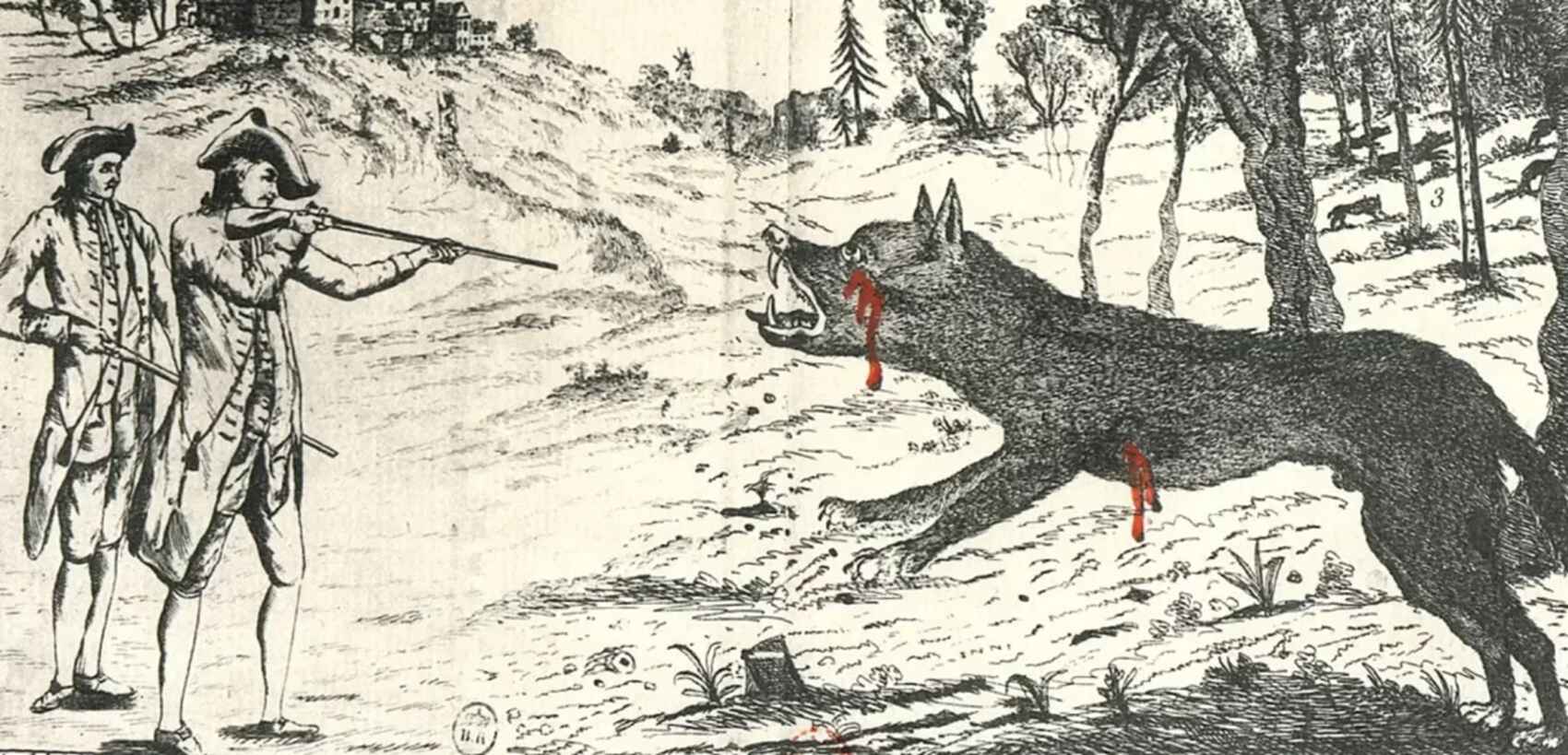
The Beast of Gévaudan affair involves a series of mysterious and deadly attacks that occurred predominantly in the former province of Gévaudan (present-day Lozère) between 1764 and 1767. Described by witnesses as a colossal wolf or an unknown creature, the animal specifically targeted isolated women and children, spreading unimaginable panic among the population. King Louis XV dispatched royal wolf hunters and military troops in an attempt to capture or kill the beast, mobilizing considerable resources for the era. These events garnered extensive media coverage, transforming the story into a national phenomenon reported by newspapers all the way to Paris. Several animals were killed, including a massive wolf shot by Jean Chastel in 1767, which marked the definitive end of the attacks. To this day, the exact identity of the beast remains a subject of intense debate: was it a canine hybrid, an exceptionally aggressive wolf, or was human intervention involved? These lingering questions make this story one of the most fascinating legends in French history.
 Background and first attacks
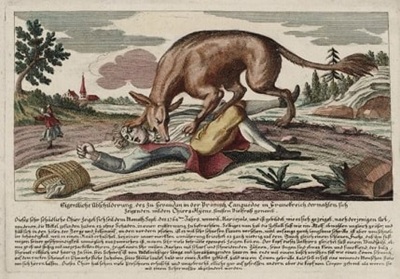
Between 1764 and 1767, the Beast of Gévaudan terrorized the northern part of the former Gévaudan province, now the Lozère department. This mysterious canid was held responsible for numerous fatal attacks, with the death toll estimated to be between 88 and 124 victims. The first incidents were reported near Langogne before spreading to other regions, including southern Auvergne.
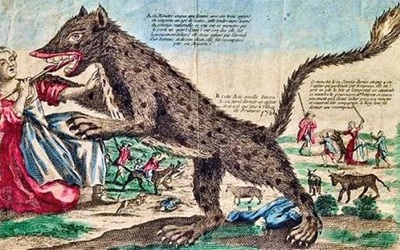
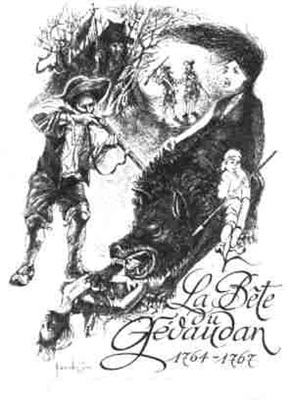 At the time, France was home to approximately 20,000 wolves. However, the Gévaudan tragedy coincided with a sudden demand for sensational news in the press, following a decline in newspaper sales after the Seven Years' War. Publications such as the Courrier d'Avignon and La Gazette de France quickly seized upon the affair, fueling rumors and justifying the deployment of military troops. Contemporaries perceived the Beast alternately as a monstrous wolf, an exotic animal, or even a demonic creature.
Among the many predators killed during the massive driven hunts, two canids were particularly suspected of being the Beast. The first, an unusually large wolf, was slain in September 1765 by François Antoine, King Louis XV's royal gunbearer. However, the attacks resumed shortly after. It was not until June 19, 1767, that Jean Chastel shot a second formidable animal in La Besseyre-Saint-Mary, definitively putting an end to the massacres.
Today, the majority of historians attribute these predations to a pack of wolves that had developed a taste for human flesh—a phenomenon that, while rare, has been documented several times throughout history. Nevertheless, the precise biological identity of the responsible canids continues to spark debate. This mystery is further amplified by current controversies surrounding the danger of Canis lupus and the return of the gray wolf to France.
Some essayists defend the wolves' innocence, favoring the hypothesis of human-perpetrated crimes. Drawing inspiration from the works of Abel Chevalley and Henri Pourrat, they suggest the involvement of a serial killer. However, no tangible evidence has ever corroborated such criminal involvement.
In Lozère and Haute-Loire, numerous tourist sites celebrate the memory and legend of the Beast of Gévaudan. This extraordinary story continues to inspire fiction, as evidenced by three major film adaptations released in 1967, 2001 (such as Brotherhood of the Wolf), and 2002.
 Chronology of events
As early as 1763, a series of similar, alarming attacks had already occurred in the Dauphiné region. Witnesses described an animal the size of a very large wolf, with burnt-coffee-colored fur and an unusually long tail. Several authors now suggest this could have been the very same beast that wreaked havoc in Gévaudan months later.
The first attacks in Gévaudan were officially reported in July 1764. The first recognized victim, Jeanne Boulet, was killed near Langogne. The attacks rapidly multiplied, particularly in the dense Mercoire forest. Étienne Lafont, syndic of the Mende diocese, quickly dispatched hunters to the area, but the tragedies continued unabated. In response to this calamity, the Bishop of Mende issued a solemn call to prayer and penance on December 31, 1764, a document famously known as the "Mandement of the Bishop of Mende."
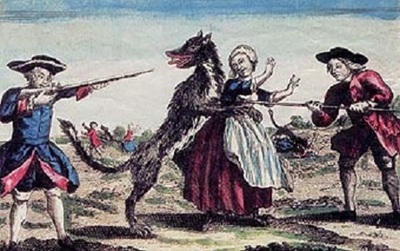
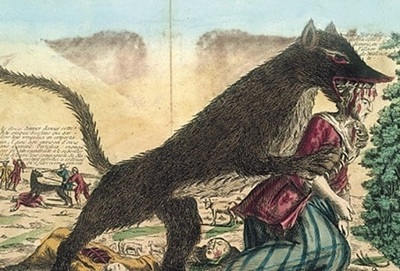 On January 12, 1765, the Beast attacked seven children in Le Villaret. Displaying exemplary courage, these young shepherds stood their ground and managed to fend off the animal. Informed of this exceptional bravery, the King offered to finance the education of one of the boys, Jacques Portefaix. Shortly after, the d'Enneval family—renowned Norman wolf hunters—claimed exclusive hunting rights and secured the dismissal of Captain Duhamel and his dragoons. However, their methods proved ineffective, and the creature continued its rampage. On June 8, François Antoine arrived in Gévaudan under royal orders to end the reign of terror.
On August 11, Marie-Jeanne Vallet achieved a heroic feat by severely wounding the Beast with a bayonet thrust to its chest, forcing it to retreat. A few days later, on August 16, Jean Chastel and his sons participated in a massive general hunt. On August 29, a guard named Rinchard fired at a ferocious animal stalking young cowherds, but the creature managed to escape once again.
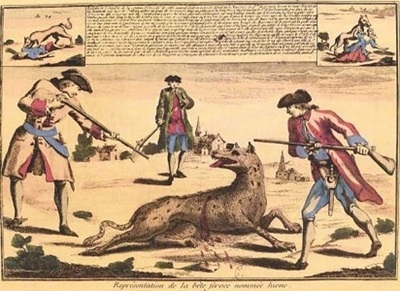
On September 21, François Antoine finally shot a gigantic wolf near the Royal Abbey of Chazes. The carcass, transported to Saugues and dissected by a surgeon, seemed to confirm the elimination of the dreaded monster. This triumph was short-lived, however, as the murderous attacks resumed with a vengeance shortly after Antoine's departure.
The epilogue of this tragedy finally occurred on June 19, 1767. During another driven hunt, local hunter Jean Chastel shot and killed a massive animal that strongly resembled a wolf. The carcass was proudly displayed at the Castle of Besque. Following this decisive event, the deadly attacks ceased permanently throughout the region.
 Geography and key figures
The Beast of Gévaudan primarily operated in a geographic area corresponding to the modern Lozère department—a rugged region characterized by deep valleys and heavily forested mountains. Although statistical estimates vary, official documents record around 230 attacks, resulting in the deaths of over 80 people.
The Chastel family, hailing from the village of La Besseyre-Saint-Mary, went down in history thanks to Jean Chastel's feat. However, their reputation has sometimes been clouded by baseless accusations from romanticized tales, which suspected them of secretly raising and training the killer animal.
 Jean Chastel (1708-1789), sometimes nicknamed "de la Masca," frequently appears in parish registers of the time as a farmer, laborer, or innkeeper. A father of nine, his siblings included Jean-Pierre Chastel, a notorious individual sentenced to death in absentia and perpetually on the run.
Jean-François-Charles, Count of Morangiès, born in 1728, became a King's musketeer at the young age of 14. Promoted to colonel during the Seven Years' War, he distinguished himself through his bravery on the battlefields of Germany. However, after enduring multiple imprisonments for debt, his life ended tragically when he was assassinated by his second wife in 1801.
Jean-Joseph, born in 1745, gradually took charge of the hunts organized against the Beast starting in 1765. It was he who meticulously orchestrated the famous hunt on June 19, 1767, during which Jean Chastel successfully fired the fatal shot.
Gabriel-Florent de Choiseul-Beaupré, who had served as the Bishop of Mende since 1723, explicitly suggested in his pastoral letter of December 31, 1764, that the Beast was a divine punishment brought upon sinners. He passed away in Mende on July 7, 1767, just eighteen days after the creature's death. Meanwhile, Abbot Trocellier, the parish priest of Aumont-Aubrac, played a prominent role by organizing numerous hunts and leaving posterity with a highly detailed description of the animal in his correspondence.
To this day, the Beast of Gévaudan remains a symbol of visceral fear and an elusive mystery. This fascinating legend is deeply and enduringly rooted in the French collective imagination.